Scitopia Chicago aims to be the first carbon-neutral, net-zero-energy (LEED Platinum) public science destination in the world by employing renewable cross-laminated timber and advanced smart glass and by harnessing geothermal and solar energy.
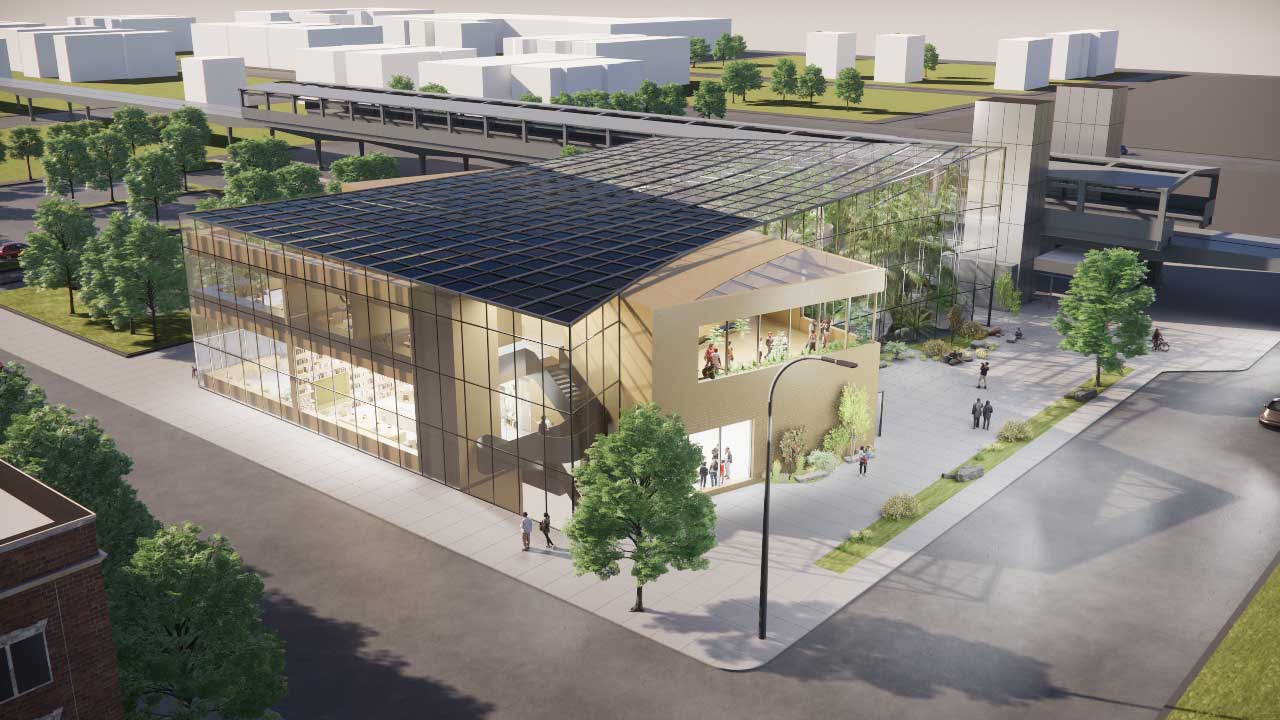
The ground floor includes Visions, an exhibition and event space showcasing the neighborhood’s 1950s jazz scene and the ecological diversity of its landscaped park, the Lost World’s unique Africa-themed museum-conservatory-vivarium, and the Golden Lily Café, a place to relax, connect or seek library resources. Teens have access to the Imaginarium’s work and hangout areas and project resources.
The second floor includes the MakerPlace, an event and performance space that allows observation of hands-on learning in MakerLabs, a Solariuam to engage horticulture activities, and access to the canopy views of the Lost World Skyway.
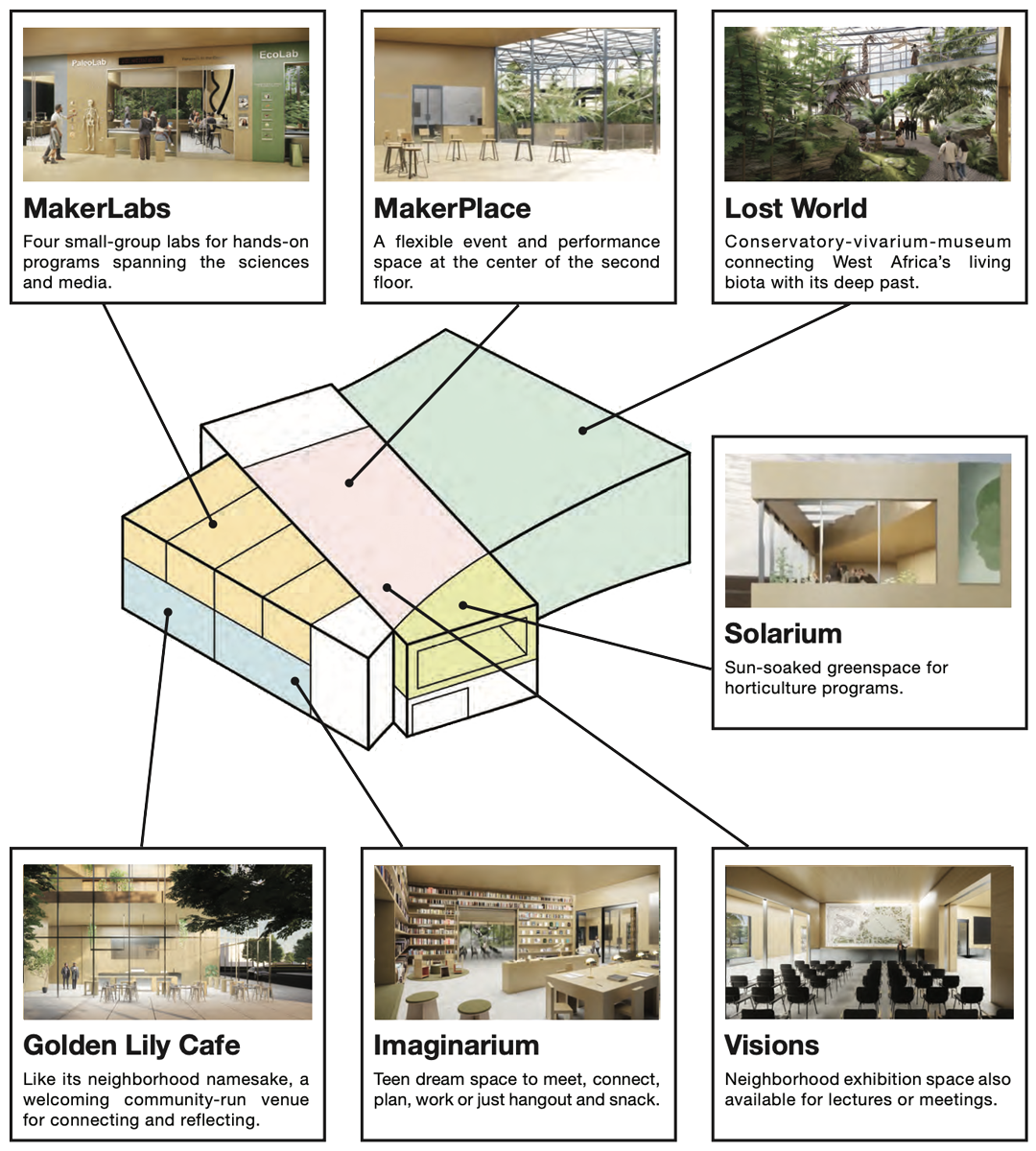
Scitopia Chicago, designed with community input, will transform a long vacant lot into an exciting science center and destination, providing educational opportunities for teens, celebrating the neighborhood’s storied past, and opening a unique public destination in the center of a transit hub.
Scitopia Chicago, designed to facilitate positive social interaction, juxtaposes under one roof a half-dozen cultural components that have never been co-located.
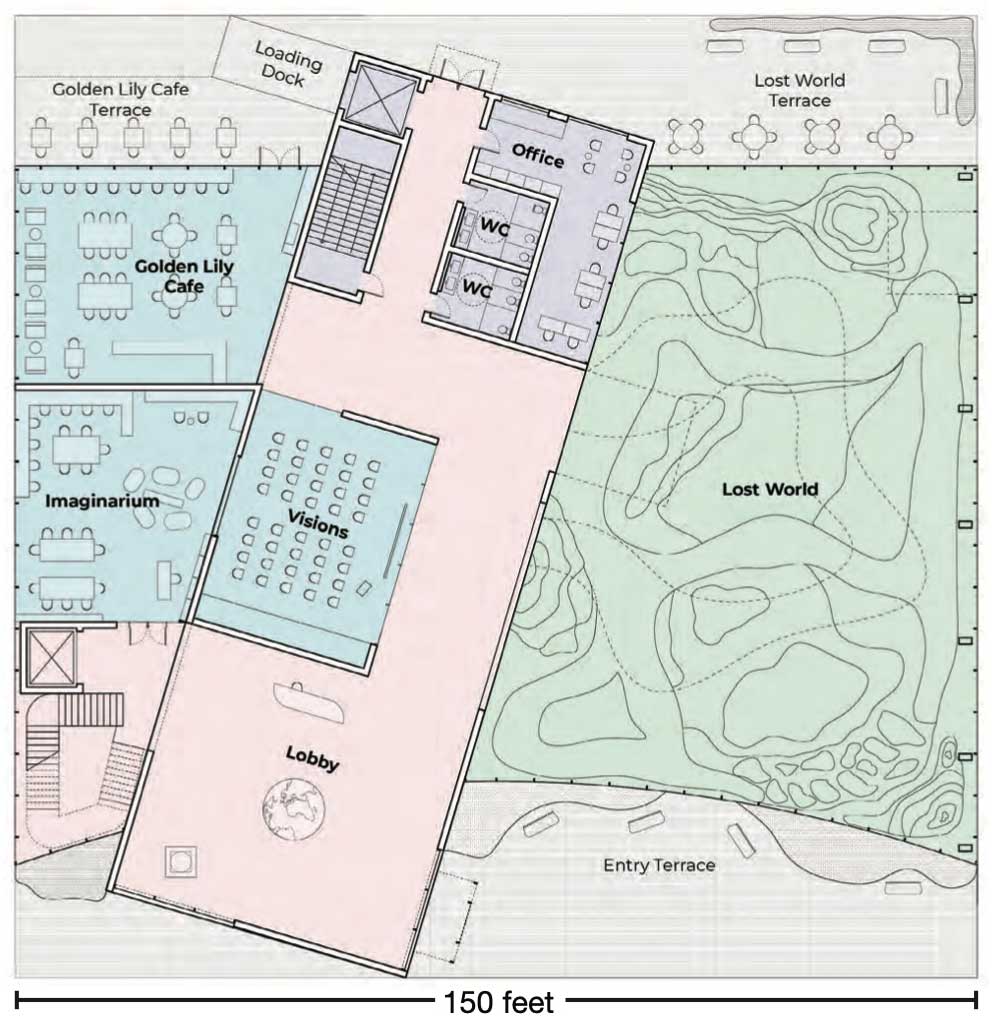
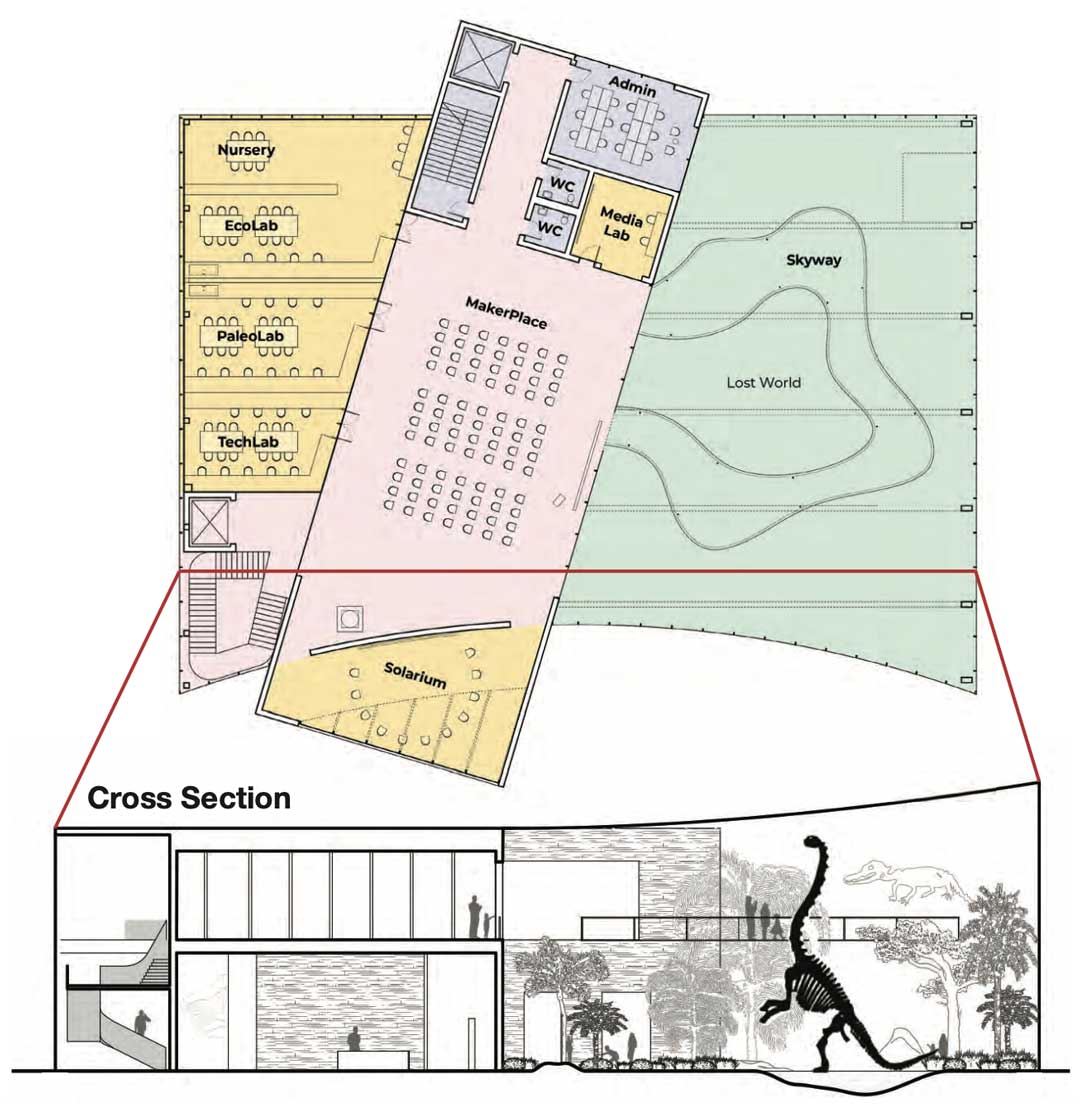
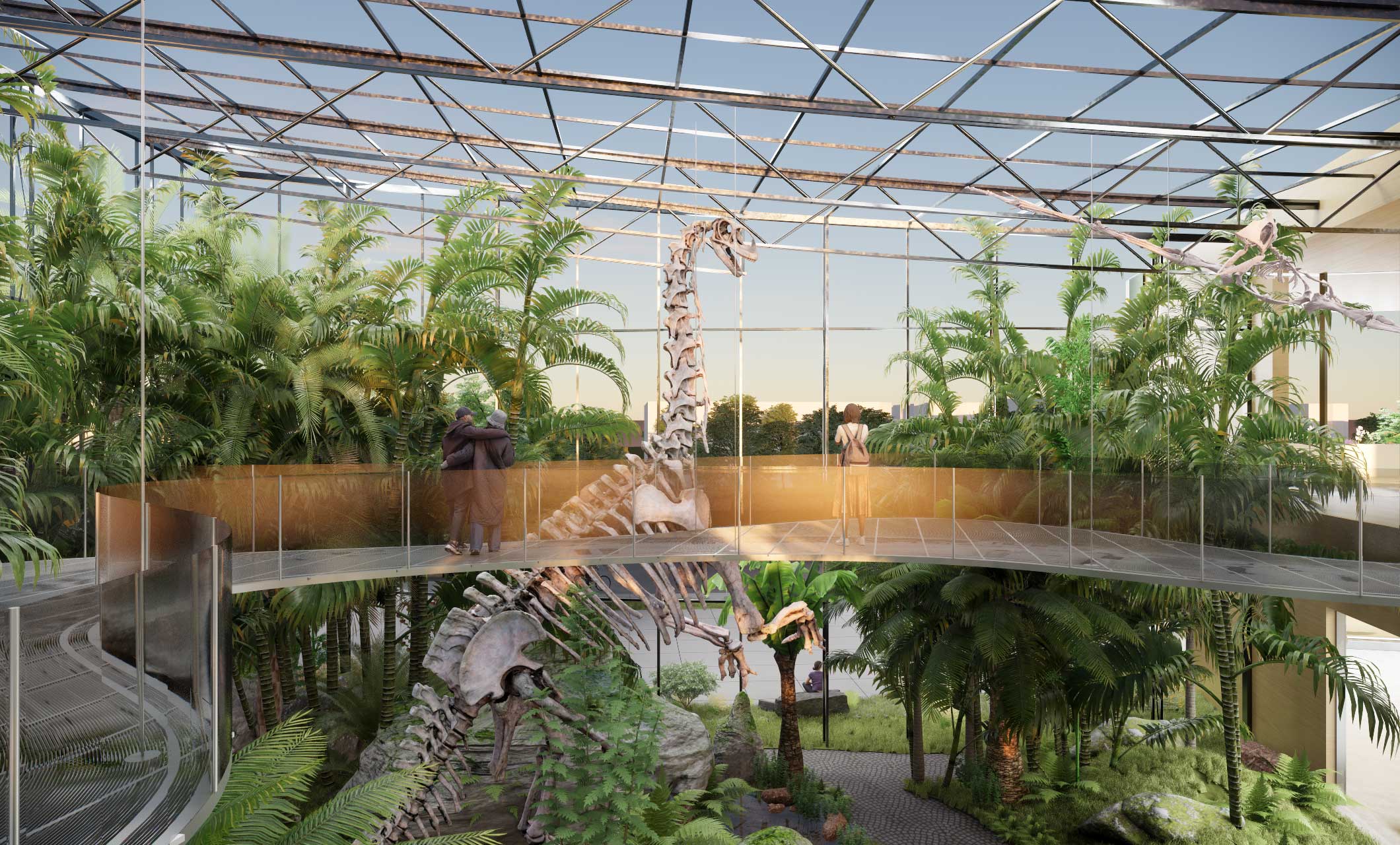
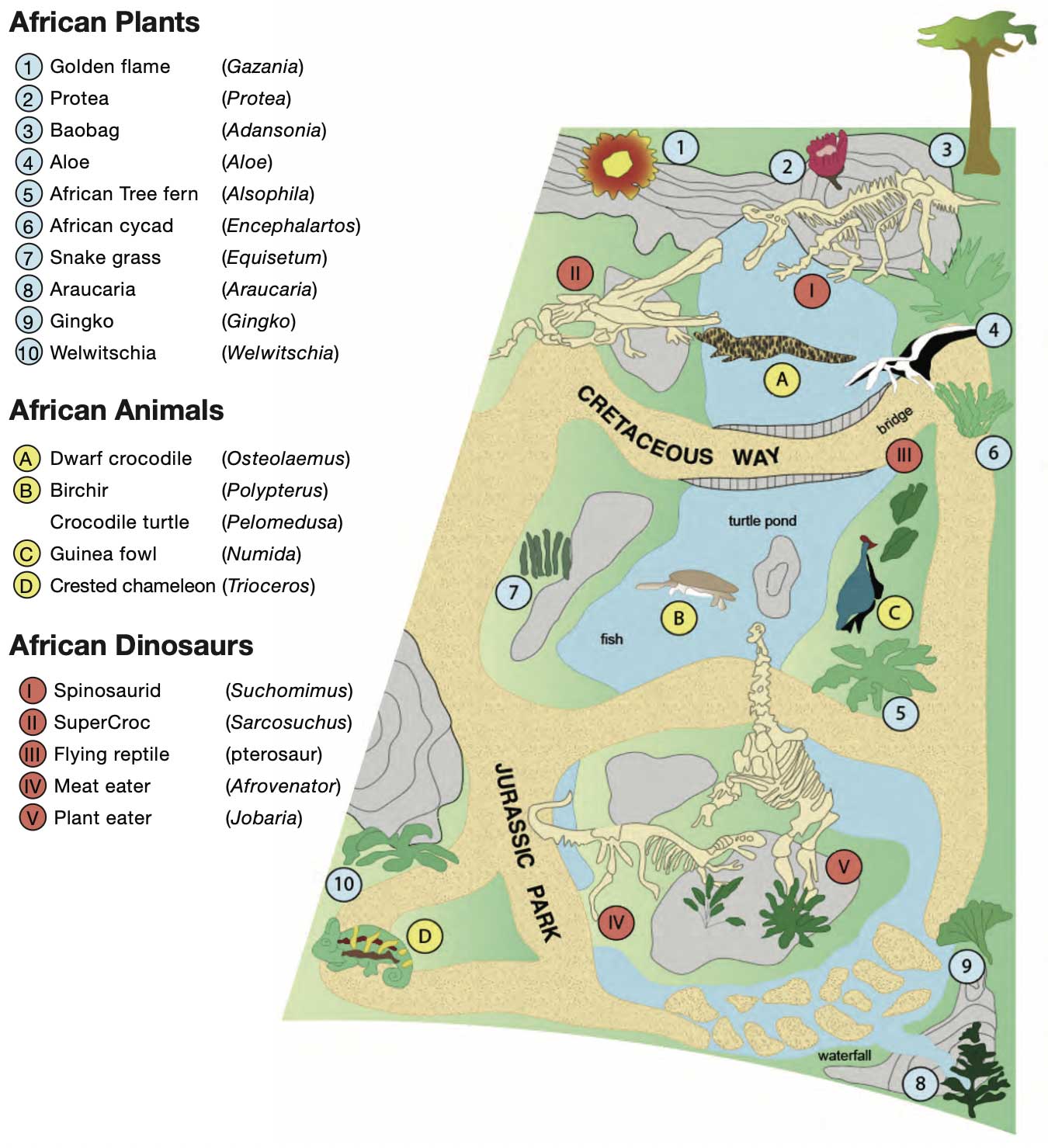
This student-tended wonderland is a unique conservatory-vivarium- museum that for the first time brings together West Africa’s iconic living and extinct species. On promenades between pools surrounded by the skeletons of extinct creatures, visitors will encounter living plants and animals with ancestry rooted in the dinosaur era.
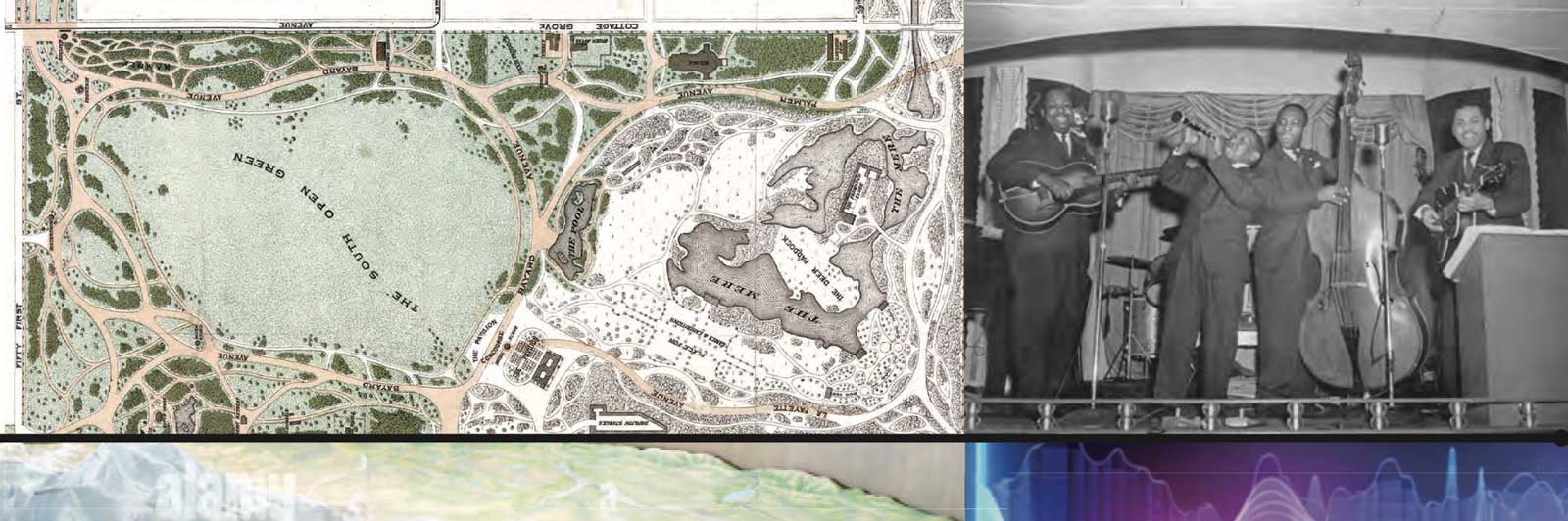
In the 1950s, Black Jazz was hopping in Washington Park, as described in the most prominent anthology of the movement: “Most of the night clubs and lounges along Garfield Boulevard were open 24 hours a day, so there was a lot of all-night sidewalk traffic.” The sights and sounds come alive in this space for all to appreciate. Likewise, the lagoon and other hidden gems in one of the city’s greatest parks are mapped and accessible in fly-overs for all to see.
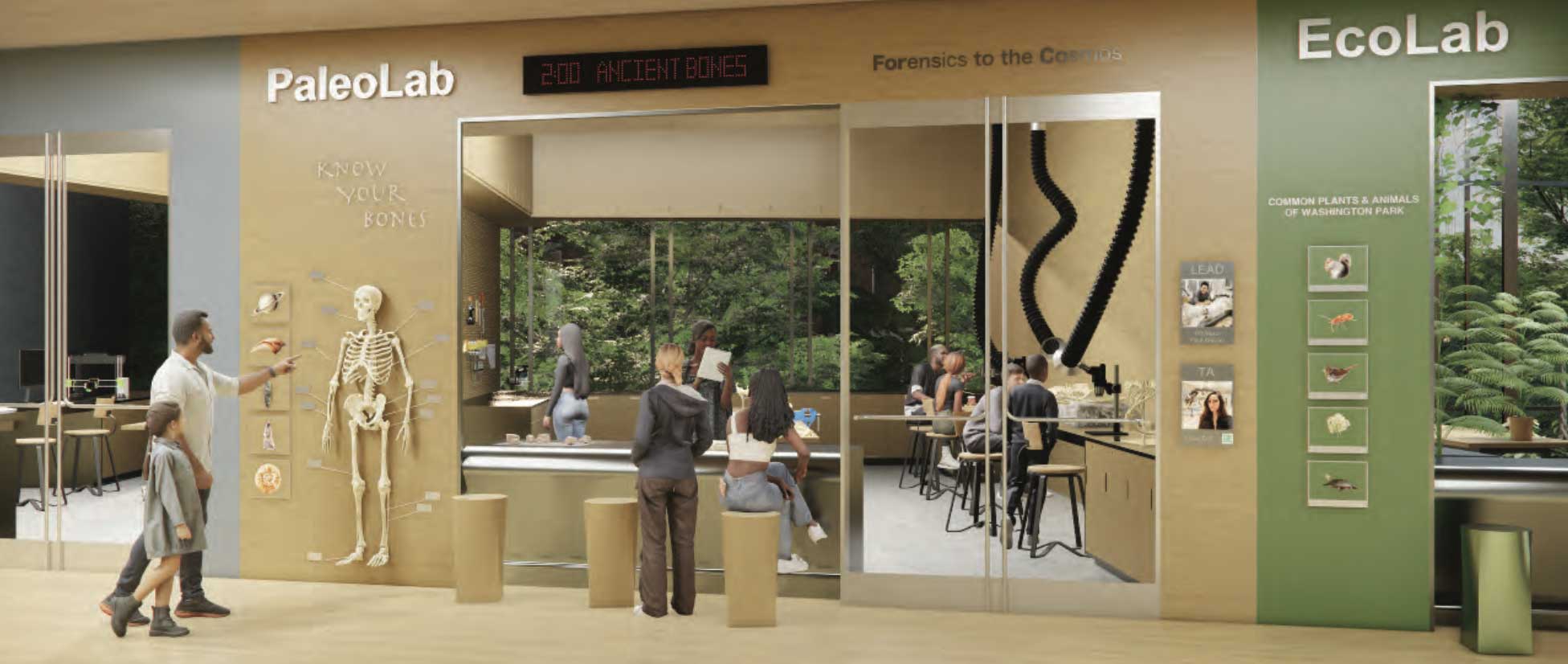
Mobile workstations, tools and equipment, a dry erase board, a projection screen and demonstration counter facilitate hands-on learning across earth science, from paleontology to forensics and cosmology. Out-of-school programs engage students in maintaining and creating exhibition components in the Lost World and elsewhere.